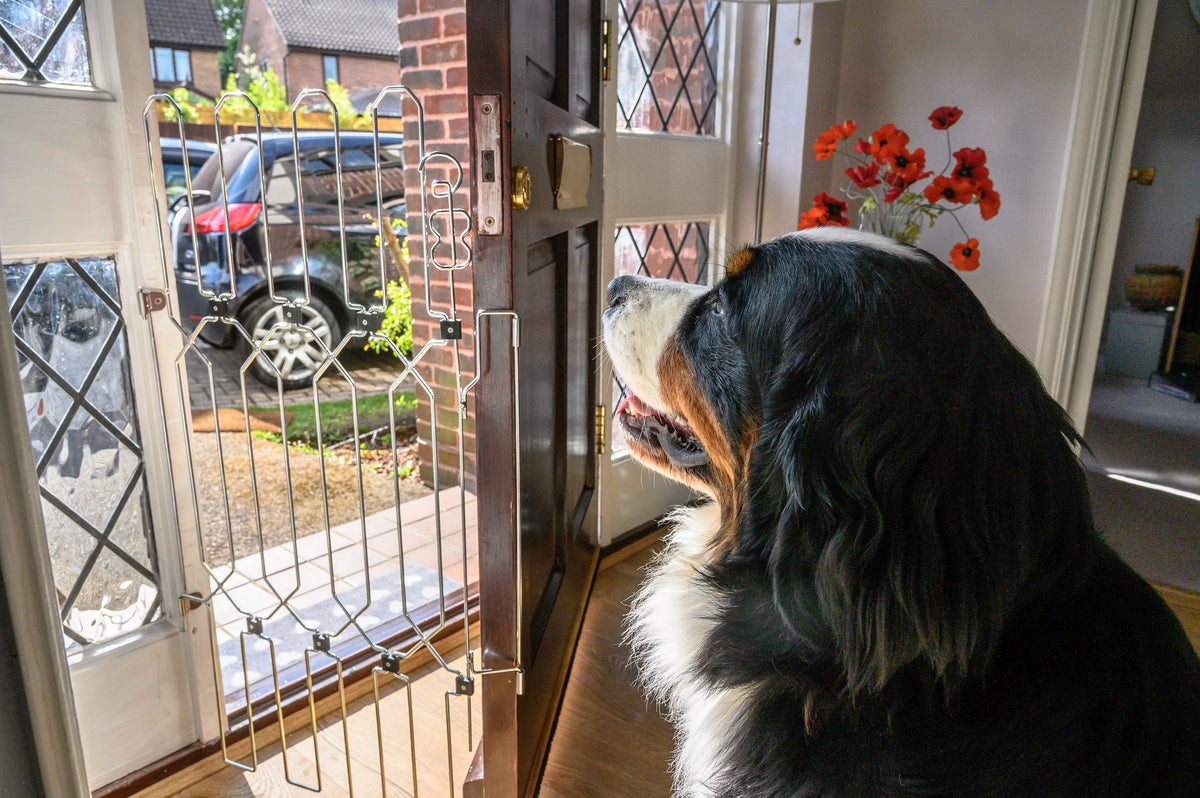

For families and individuals living with dementia, a pet dog can often be a vital source of companionship, routine and emotional comfort. However, with an Alzheimer's or dementia diagnosis comes an influx of visitors. Between healthcare professionals and family and friends, your front door is a revolving door of people coming and going, which instantly creates a safety risk for your four legged friend.
Besides the obvious escape risk, new faces, ringing doorbells and more people in the house can cause your dog unnecessary stress and confusion. Nervous pets may begin to show signs of anxiety, aggression or try to flee when the door is open. Creating a dedicated safe space for your dog using specialised pet gates allows you to protect your pup whilst ensuring all essential visits run smoothly.
Why Care Visits Cause Stress for Dogs
Like many of us humans, dogs thrive on predictability and routine, so any sudden changes to this in their home can create stress and anxiety. Frequent care visits means;
- Unfamiliararity: New faces and smells in their home can make your dog feel a little uneasy or territorial.
- Front doors opening: A busy front door increases the risk of a dog slipping past and escaping outside.
- Noise and commotion: Loud doorbells, multiple new voices and movement throughout the hallway and house can be overstimulating to a dog's senses.
-
Mimicking their humans: Dogs are very switched on to their humans emotions and will pick up on any agitation or confusion of their owner is experiencing.
How to Build a Safe Space for Your Dog
Setting up a safe, secure space for your dog doesn’t mean isolating them or locking them in a room, it’s about providing a peaceful boundary where they can relax whilst still feeling close to their owner.
Choose the right location
Select a quiet room or nook away from your main entrance. A cosy corner in your living room or a quiet spot in the kitchen is perfect for some down time when visitors arrive.
Install a pet gate
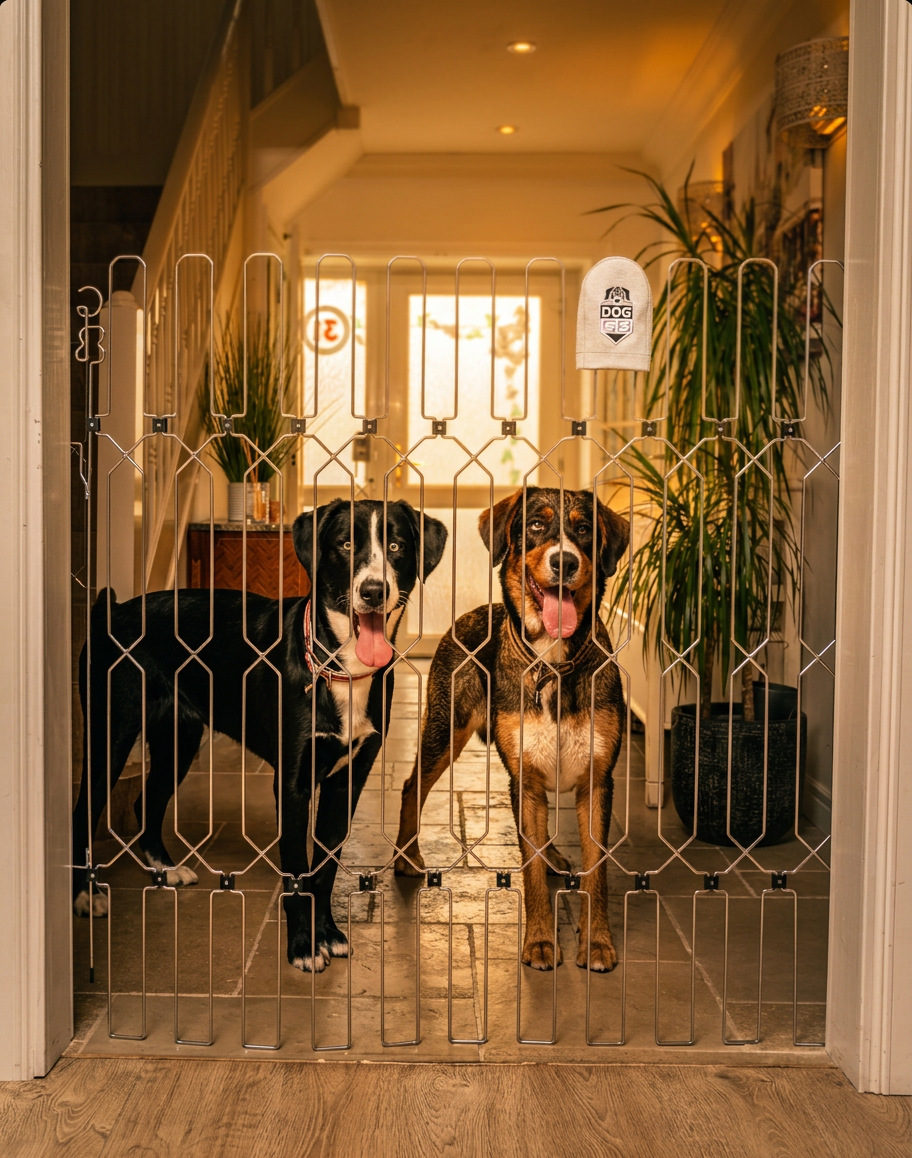
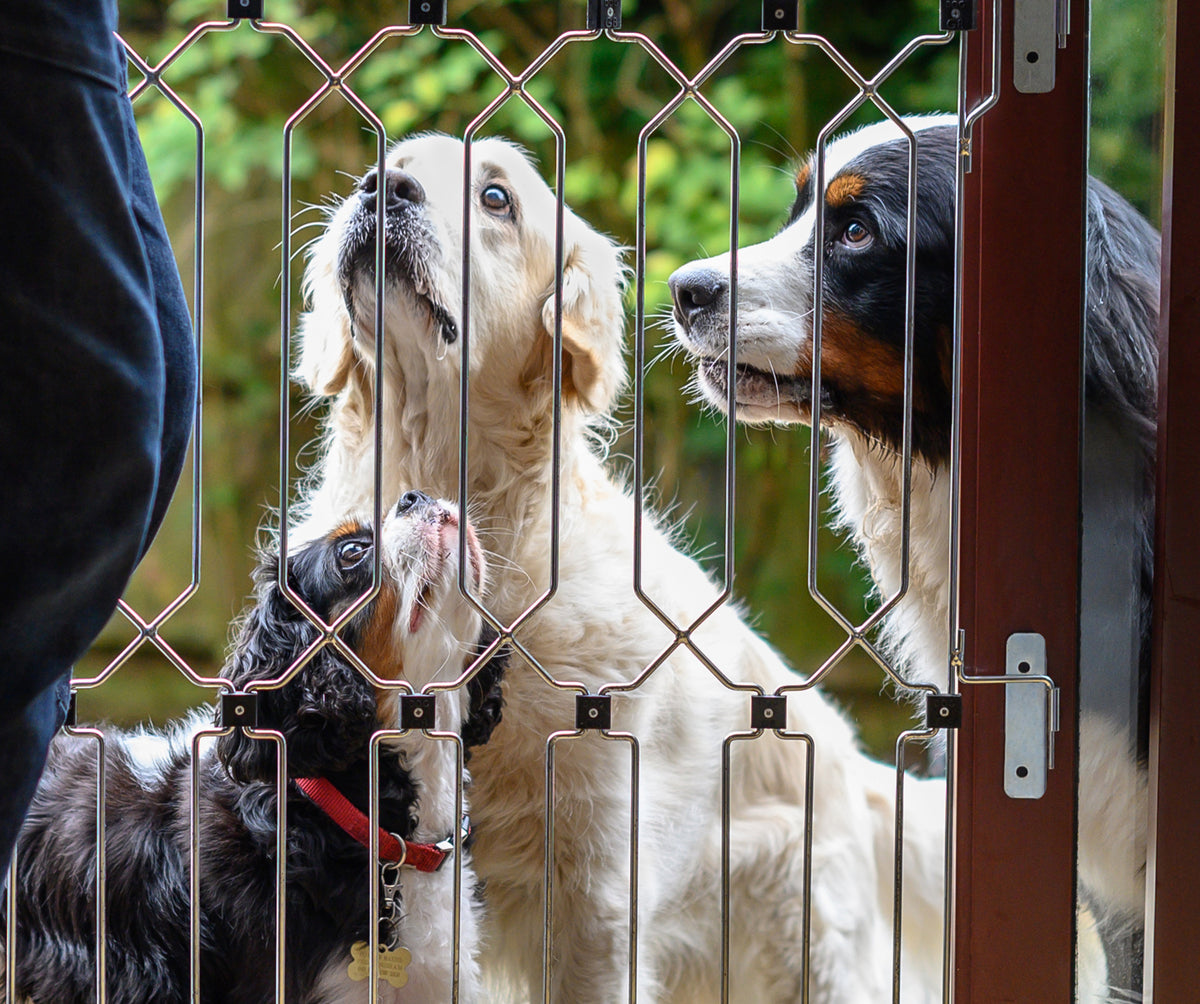
Traditional pet gates or baby gates often create trip hazards and aren’t designed for strong or jumpy dogs. A purpose designed pet gate from Dog-G8 will create a secure boundary for your pet without adding trip hazards. Our gates boast a compact design that can be folded away when not in use, mesh panels to give your nosy pup visibility of what you’re up to and strength to keep even the most boisterous dogs secure.
Make it home
This is a safe space where your dog can relax and enjoy some downtime whilst people attend to your loved one, so making it homely and comfy is key. Add their favourite blanket, bed or toys for comfort and always ensure they have access to fresh water. You may find that your dog likes a bit of background noise, such as the radio, to help them feel less alone whilst all the humans are busy.
Top Tips for Managing Dogs & Dementia Carers
Beyond creating physical barriers, simple routine adjustments will help keep care visits stress free for everyone.
Educate visitors
Let any care workers or medical professionals know in advance that there is a dog in the house. You can tailor your messaging to suit the needs of your dog, so this may be requesting they don’t knock, don’t say hello to the dog (or do say hello!) or refrain from giving them treats - whatever is right for your dog!
Make the safe zone appealing
Don’t wait for a carer or visitor to arrive before getting your dog behind the pet gate as this can create negative connotations. Practice guiding your dog into their new space during calm moments of the day and rewarding them with their favourite treat so they associate the space with positive experiences.
Keep hallways clear
Try and store leads, harnesses and dog toys away neatly to prevent tripping or accidents when you know visitors are due.
Support Your Loved Ones and Their Companion Throughout Dementia
Living with dementia presents daily challenges, but maintaining the bond between a person and their dog offers proven emotional and psychological benefits. By installing a flexible barrier like Dog-G8, you create a stress-free sanctuary for your dog, protect visiting carers, and ensure your home remains safe and welcoming for everyone involved.
If you have any queries about pet ownership, dogs and dementia, please reach out to our team who will be happy to help.